Seven months on, why BJP sees a way past April’s delimitation defeat
By The Indian ExpressCross-checked on TMR
Story confidence
Developing
66/100
Developing: 4 sources
The story
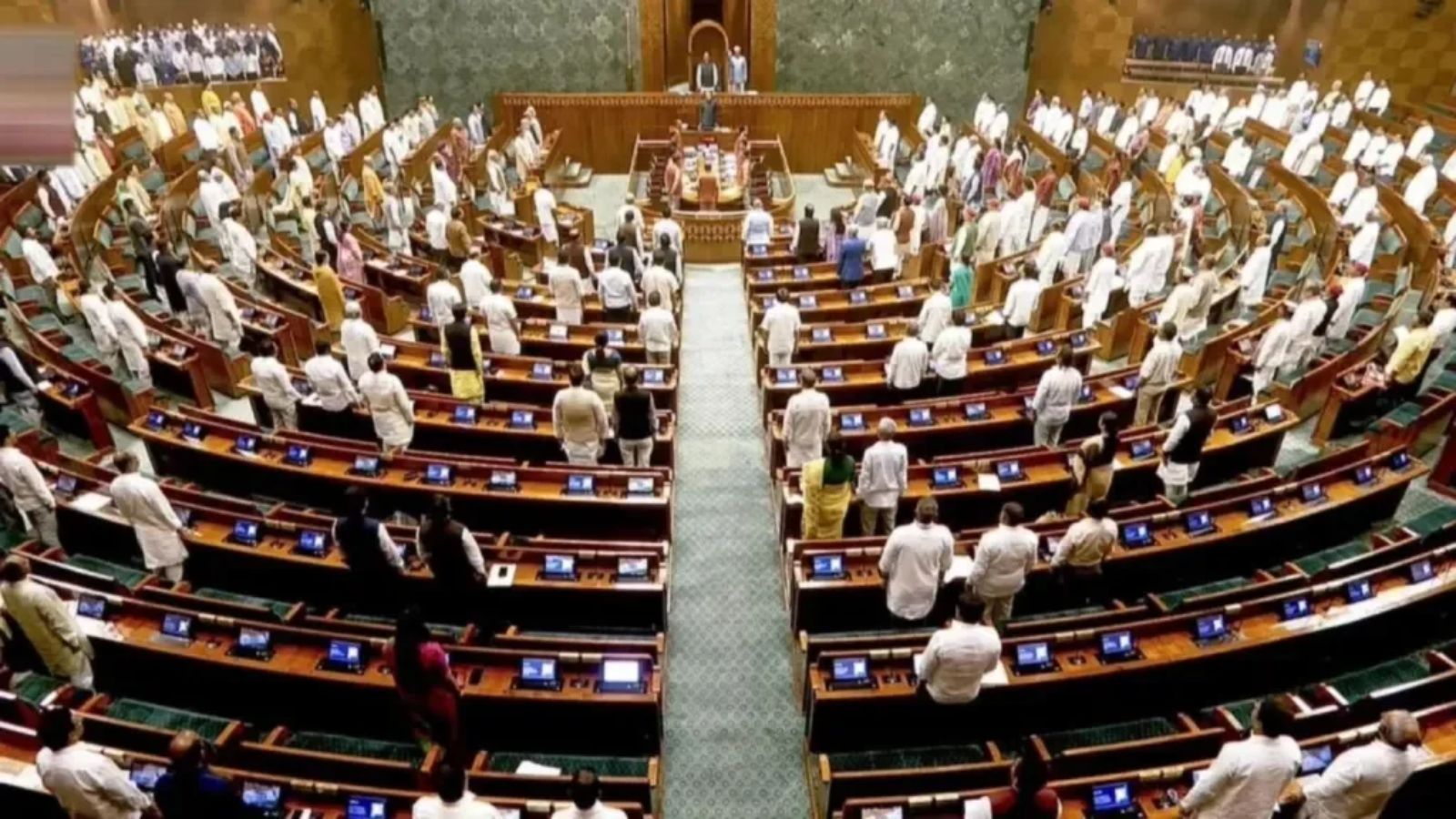
Seven months after a united Opposition handed the Modi government a rare legislative defeat in Parliament, the Centre is set to make another attempt at getting its delimitation package passed. Much has changed in the intervening period, both in the legislation that the government proposes to bring and in the composition of the Opposition that defeated it in April.
The Constitution amendment Bill cleared by the Union Cabinet Friday incorporates two significant changes. It provides for a uniform 50% increase in Lok Sabha seats across states and seeks to freeze their relative representation in Parliament, based on the 1971 population, until 2051.
Both provisions address the principal concerns raised by southern parties, particularly the DMK, which had spearheaded the political mobilisation against population-based delimitation. In March 2025, the DMK had brought together several regional parties and Chief Ministers in Chennai to demand an extension of the freeze on inter-state allocation of parliamentary seats by another 25 years.
While the government had repeatedly assured Parliament in April that every state would get a proportionate increase in seats, the assurance did not find its way into the legislative text. The Bill, in fact, retained the constitutional principle of allocating seats to states on the basis of population while seeking to remove the existing freeze. This was at the heart of the apprehensions expressed by southern states which had successfully controlled population growth.
By incorporating these safeguards, the government has substantially addressed the federal concerns that had helped bring disparate Opposition parties together against the legislation.
Political terrain has shifted
But it is the political developments since April that have made the government’s task less difficult.
The DMK, which has 22 MPs in Lok Sabha and eight in Rajya Sabha, is no longer in power in Tamil Nadu and stands estranged from the Congress following the latter’s decision to end their alliance after the Assembly elections and join the Vijay-led TVK government.
For the DMK, the incorporation of its demands in the legislation will allow it to support the Bill while claiming to have protected Tamil Nadu’s interests. Its chief political rival in the state, the TVK, has itself indicated that it is not opposed to delimitation if the representation of southern states is protected.
On Friday, DMK chief M K Stalin reiterated his two conditions for the exercise, both of which the government appears to have accommodated.
In Maharashtra, the Sharad Pawar-led NCP, which has eight Lok Sabha MPs, has increasingly shown signs of a thaw in its relations with the BJP amid speculation over a reunification of the two NCP factions.
Party working president Supriya Sule had indicated as early as July that the NCP (SP) could support delimitation if it provided for a uniform 50% increase in seats. She reiterated her openness to the legislation this week.
On Friday, NCP (SP) MLA and national spokesperson Jitendra Awhad said the party will support the Bill if it provides for a uniform 50 per cent increase in Lok Sabha seats across all states. The party’s position on the delimitation issue, he said, was clear.
Speaking to reporters after meeting party chief Sharad Pawar, Awhad said delimitation was a constitutional exercise that would have to be undertaken sooner or later. He said the party had decided to support the proposal. “There is absolutely no confusion. It has been decided that we will support delimitation. We will support it,” he said.
Sule, on her part, said, “You will come to know our party’s stand on the floor of the House on Monday. No decision will be taken without reading the draft of the Bill. We will all sit together and discuss it. Perhaps Awhad Saheb made the statement based on media reports regarding the 50 per cent increase in seats and women’s reservation. We will not react until we have read the finer details of the draft.”
More significantly, two constituents of the INDIA bloc have suffered substantial erosion in their parliamentary strength. Following the TMC’s defeat in the West Bengal Assembly elections, 20 of its Lok Sabha MPs broke away and sought to merge with the Nationalist Citizens Party of India (NCPI) whose support the NDA is now counting on. Petitions seeking their disqualification, however, remain pending before Lok Sabha Speaker Om Birla.
Similarly, six Shiv Sena (UBT) MPs have crossed over to the Eknath Shinde-led Shiv Sena. The Shiromani Akali Dal, which had walked out of the NDA in 2020 over the farm laws, has also indicated its support for the legislation. The YSR Congress Party, which had backed the government in April, remains inclined to support the Bill.
The implications of these changes are significant for the government’s parliamentary arithmetic. On April 17, the Constitution amendment Bill fell with 298 MPs voting in its favour and 230 against it. With 528 MPs voting, the government had fallen short of the requisite two-thirds majority by 54 votes.
With three vacancies in Lok Sabha at present, the government will require 360 votes if virtually the entire House participates in the division. The BJP-led alliance, together with the breakaway TMC MPs and its other supporters, is estimated to have around 320 members. The support of the DMK, NCP (SP) and YSRCP, with a combined strength of 34 MPs, would take it within striking distance of the two-thirds mark.
Unlike an ordinary Bill, a Constitution amendment Bill requires both a majority of the total membership of each House and the support of at least two-thirds of those present and voting. Thus, even abstentions by a handful of Opposition MPs could prove consequential. The government has been reaching out to smaller parties as well as individual MPs over the past few months.
In Rajya Sabha, where the NDA also needs support from outside the alliance, the combined strength of the DMK, NCP (SP) and YSRCP could considerably narrow the gap. Government sources have expressed confidence about securing the requisite majority in both Houses.
For the BJP, however, the significance of getting the legislation passed goes beyond delimitation and the implementation of women’s reservation ahead of the 2029 Lok Sabha elections.
Since July, when the Cockroach Janta Party (CJP)-led agitation over examination paper leaks culminated in the resignation of Union Education Minister Dharmendra Pradhan, the government has found itself frequently responding to a political agenda set outside its own ranks. The subsequent mobilisation against Chief Election Commissioner Gyanesh Kumar and the Special Intensive Revision (SIR) of electoral rolls gave the Opposition another opportunity to put the government on the defensive.
The Congress, in particular, has sought to build on the public mobilisation to consolidate Opposition unity. It has accused the government of engineering defections to manufacture a special majority and continues to demand implementation of women’s reservation independently of delimitation.
The passage of the Constitution amendment Bill will enable the BJP to demonstrate that, despite the political challenges it has faced on the streets and lack of a majority of its own in Lok Sabha, it retains the ability to mobilise parliamentary support well beyond the NDA.
Coming ahead of the crucial Uttar Pradesh Assembly elections, it would also allow the party to shift the centre of political discourse from examination paper leaks and the credibility of the electoral process to women’s political empowerment and the expansion of representative institutions.
Importantly, it would expose the limits of the Opposition’s parliamentary cohesion at a time when its mobilisation outside Parliament has acquired fresh momentum. A legislative exercise that became a demonstration of Opposition unity in April could, seven months later, become a demonstration of how much of that unity has unravelled.
BlindspotOnly English-language outlets are covering this so far.
Coverage breakdown
04
Outlets
05
Reports
01
Language
Coverage by language
Outlet reliability
National vs local desks
Full coverage
4 outletsThe Indian Express · EN
BJP’s delimitation math: Where will the party find the numbers this time?
Reliability unrated
The New Indian Express · EN
The numbers game: BJP courts regional parties as DMK, NCP-SP weigh delimitation support
Reliability unrated
Financial Express · EN
BJP’s delimitation push: What has changed in its numbers strategy this time?
Reliability unrated
India Today · EN
Delimitation Bill returns: How BJP plans to get it through this time
Reliability unrated