'Music has to come from soul': Baawari Basanti’s experiments with sound
By Deccan HeraldCross-checked on TMR
Story confidence
Single source
40/100
Reported by a single source so far
The story
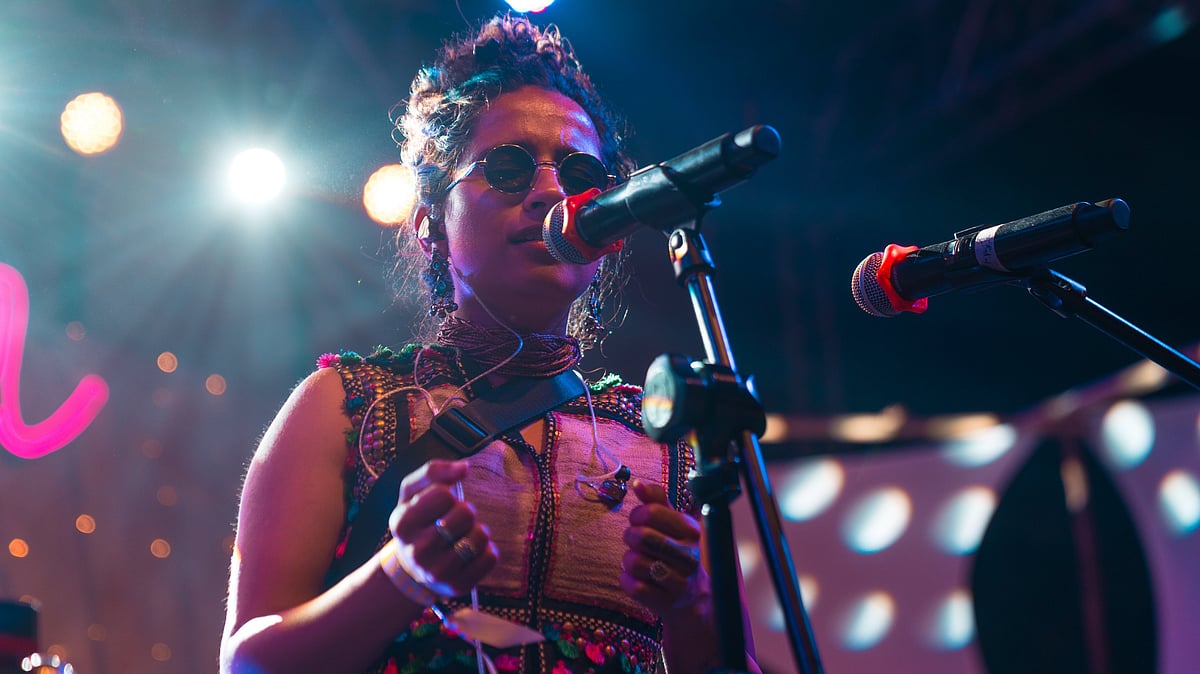
For Mahima Dayal, music was never something she had to seek out. Growing up in Delhi, she often spent time sitting in the room where her grandmother taught Hindustani classical music to her students.
Experience a more refined e-paper today
By simply being there, she absorbed the music until it became second nature to her. She went on to study Hindustani classical music at Gandharva Mahavidyalaya before pursuing journalism.
Feeling disillusioned with the world of news, she returned to music in 2017 and enrolled at the Swarnabhoomi Academy of Music in Chennai. “I realised I wanted to do music, both creatively and as a career.” Today, she performs as Baawari Basanti.
Her sound draws on an eclectic range of styles. Her grandmother’s lessons introduced her to Indian classical music, bhajans and ghazals, while college exposed her to English pop and later, jazz. Learning bass opened up another dimension, helping her understand Western music theory.
Around 2017, she began exploring electronic music. She was now experimenting with microphones, synthesisers and digital audio workstations such as Ableton. Recording in her bedroom rather than in a studio gave her the freedom to experiment with sound.
But she never left classical music behind. She continues to learn from her guru, Mandakini Swain. “I don’t see music as a genre anymore, just sound,” says the 36-year-old. Her classical training, she explains, allows her to improvise and collaborate across musical forms.
She has released 25 singles, and her first EP came out in June. Titled Wahh, it is a collection of five songs exploring anxiety, ageing, love, sexuality and resilience. Inspired in part by the poetry and singing of yesteryear Bollywood actor Meena Kumari, Mahima wanted to give voice to emotions women have experienced across generations but have not always felt comfortable expressing.
Mahima describes her creative process as intuitive. She usually begins with a ukulele or tanpura, developing melodies and lyrics before translating them into arrangements on Ableton. For Wahh, she deliberately kept the production minimal, using harmoniums, synth pads, vocal harmonies and soft percussion to let the emotions take centre stage.
Collaborations have also expanded her musical vocabulary. Working with hip-hop duo Seedhe Maut showed her that she could experiment with rap, while collaborating with Lost Stories introduced her to new approaches to production and atmospheric sound. She remains selective about collaborations because she believes that shared sensibilities are essential.
In her next project, she is exploring a more cinematic sound, incorporating elements of house, drum and bass, and jungle. “Music has to come from soul for me,” she says. For an artiste who calls herself “genre-fluid”, the possibilities remain wide open.
Only Deccan Herald has reported this so far. New reports from every outlet are matched against it through the day.
BlindspotNo other outlet has reported this yet.
Coverage breakdown
01
Outlet
01
Report
01
Language
Coverage by language
Outlet reliability
National vs local desks
Full coverage
1 outletDeccan Herald · EN
'Music has to come from soul': Baawari Basanti’s experiments with sound
Reliability unrated