Hebbal Lake: A lake by nature, a tank by legal definition?
By Deccan HeraldCross-checked on TMR
Story confidence
Single source
40/100
Reported by a single source so far
The story
Bengaluru: The classification of Hebbal Lake has become a key point of contention in the debate over the proposed Hebbal Integrated Bypass Road, which includes an elevated road and a short tunnel.
Experience a more refined e-paper today
While the Bangalore Development Authority (BDA) maintains that Hebbal Lake is a man-made irrigation tank excluded from the statutory definition of a wetland under the Wetlands (Conservation and Management) Rules, 2017, environmentalists argue that its ecological significance and existing protections cannot be dismissed because of its historical origins.
The distinction is more than a matter of terminology. It raises questions about the legal protection available to the lake, the permissibility of construction around its ecosystem, and the environmental assessments required before infrastructure projects are undertaken.
BBMP's project report documents the lake's ecological functions, the deterioration of its wetland area, and the need for restoration measures.
What does the BBMP report say?
A BBMP Project Report on restoring the wetland classifies Hebbal Lake as a man-made tank. Its morphometric survey describes its ecological condition as mesotrophic, indicating moderate nutrient levels and intermediate biological productivity. This classification, however, does not determine its legal wetland status.
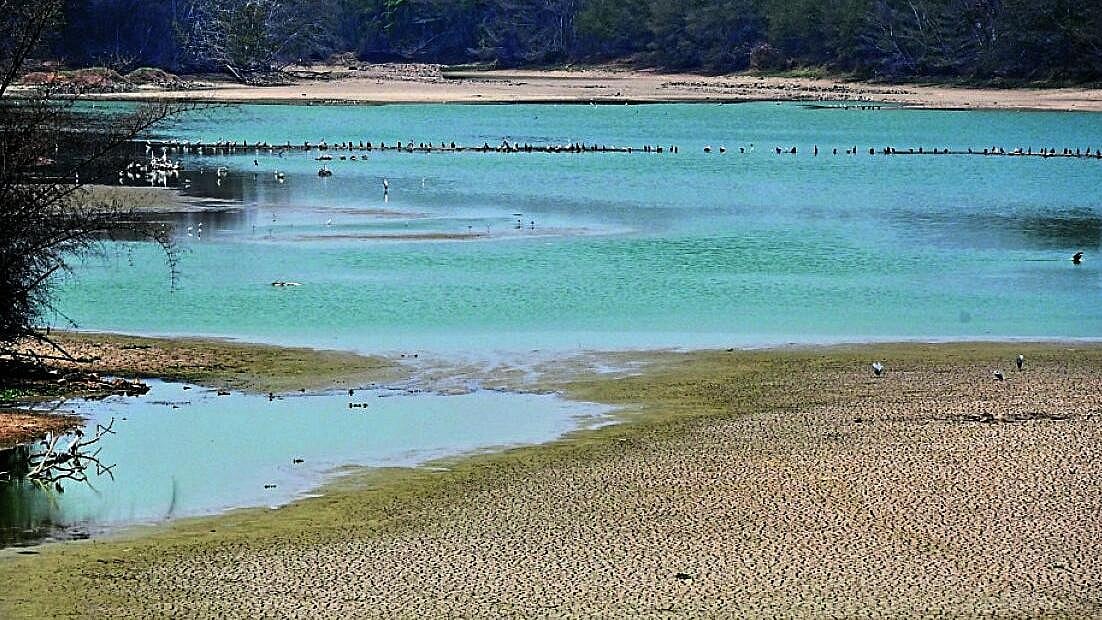
The report notes that urban waterbodies have, over time, acquired wetland characteristics and perform important ecological functions, including trapping sediments, mitigating floods, recharging groundwater and providing habitats for migratory birds and aquatic life.
To address the deterioration, the BBMP proposed desilting the wetland, constructing a new bund, restoring inlet streams and installing dedicated sewage diversion drains to improve the quality of incoming water.
These observations highlight the ecological importance of the lake and its associated wetland area, irrespective of the debate over its statutory classification.
BDA's position: A tank, not a statutory wetland
The BDA's Public Information Dossier and FAQ offer a different legal interpretation. Citing historical records from the Mysore Gazetteer (1897 and 1929–30), the authority states that Bengaluru's plateau waterbodies were predominantly human-made irrigation tanks formed by embanking valley streams. Hebbal Lake was historically known as Hebbal tank and used for irrigation and drinking water.
The BDA relies on Rule 2(1)(g) of the Wetlands Rules, 2017, which excludes specified human-made waterbodies, including those constructed for irrigation and drinking water, from the statutory definition of wetlands.
Accordingly, it maintains that Hebbal Lake is governed as a tank under the Karnataka Tank Conservation and Development Authority (KTCDA) Act, 2014.
The legal distinction gained further significance following an October 2025 Supreme Court judgment concerning Futala Tank in Nagpur. The Court upheld its exclusion from the statutory definition of wetlands because it was a human-made waterbody constructed for irrigation and drinking water. However, it also emphasised that the Public Trust Doctrine applies to man-made waterbodies, recognising their ecological and environmental value.
The judgment does not automatically determine Hebbal Lake's legal status. Its historical purpose, applicable notifications and specific circumstances must be examined separately.
Environmentalists question the interpretation
D T Devare, Co-founder and Trustee of Bangalore Environment Trust, argues that Hebbal Lake is a wetland and that the proposed tunnel raises concerns under existing judicial protections.
He says the tunnel passes through a wetland area, while the BDA maintains that construction is taking place beneath the bund rather than through the lake itself.
“It is basically a technical fix,” he says.
Devare also cites the Supreme Court's 2017 directions on wetlands mapped under the earlier Wetlands Rules, 2010. He argues that the earlier framework did not make the same distinction between man-made and natural waterbodies.
He further invokes the Ramsar Convention, whose broad definition of wetlands includes artificial waterbodies. However, the international definition and India's statutory definition under the 2017 Rules are not interchangeable.
Vow to protect the hydrology
Hebbal Lake is recognised as a wetland in IISc’s scientific inventory but was not included in the Karnataka Government’s list of 11 wetlands submitted to the NGT on 25 July 2022. Therefore, its formal notification under the Wetlands (Conservation and Management) Rules, 2017, is not established.
However, the absence of formal notification does not imply an absence of legal protection. Hebbal Lake remains subject to applicable environmental and lake-protection laws, including NGT directions on buffer zones and Supreme Court directions concerning wetland identification, demarcation and conservation.
The debate extends beyond legal classification. The proposed tunnel's proximity to the lake has raised concerns about groundwater movement, stormwater drainage, flood management and the lake's storage capacity.
The BDA has maintained that the project will not obstruct the lake's natural inflow and outflow. The KTCDA has also granted conditional approval involving 3.3 acres within the lake premises, subject to environmental safeguards.
However, the Karnataka High Court, while declining to temporarily halt construction in September 2026, directed the government to explain how the project's design would protect the lake's water flow.
The DPR has earmarked Rs 75 lakh for an environmental impact assessment, but the assessment has not been made publicly available. The BDA has described the allocation as a budgetary provision. A standalone tunnel does not automatically require prior environmental clearance under the EIA Notification, 2006, although other applicable environmental and legal safeguards remain relevant.
Finance Department's objections
The project has also faced financial and planning objections. Karnataka's Finance Department questioned the Rs 2,215-crore proposal, arguing that a surface road could deliver comparable traffic relief at a substantially lower cost.
It also raised concerns about the project's funding, the absence of an independent feasibility assessment, its potential impact on the proposed North-South Tunnel (B-SMILE) tender and the lack of adequate public transport integration.
The department's objections add another dimension to the debate: whether less expensive alternatives with potentially lower environmental impacts were adequately examined before the project was approved.
The disagreement over Hebbal Lake demonstrates why legal classification alone cannot settle the environmental debate.
Even if the lake qualifies for exclusion from the statutory definition of a wetland under the 2017 Rules, that does not mean it is exempt from other applicable protections or that its ecological functions can be disregarded.
The questions that remain are whether the tunnel will affect the lake's natural drainage, groundwater recharge and flood-storage capacity, and whether the safeguards proposed by the authorities are supported by publicly accessible scientific studies.
Only Deccan Herald has reported this so far. New reports from every outlet are matched against it through the day.
BlindspotNo other outlet has reported this yet.
Coverage breakdown
01
Outlet
01
Report
01
Language
Coverage by language
Outlet reliability
National vs local desks
Full coverage
1 outletDeccan Herald · EN
Hebbal Lake: A lake by nature, a tank by legal definition?
Reliability unrated