COP31: Ambitions meet acrimony in Antalya
By Deccan HeraldCross-checked on TMR
Story confidence
Single source
40/100
Reported by a single source so far
The story
Turkey hosted UN Climate Change Conference (COP31) in Antalya
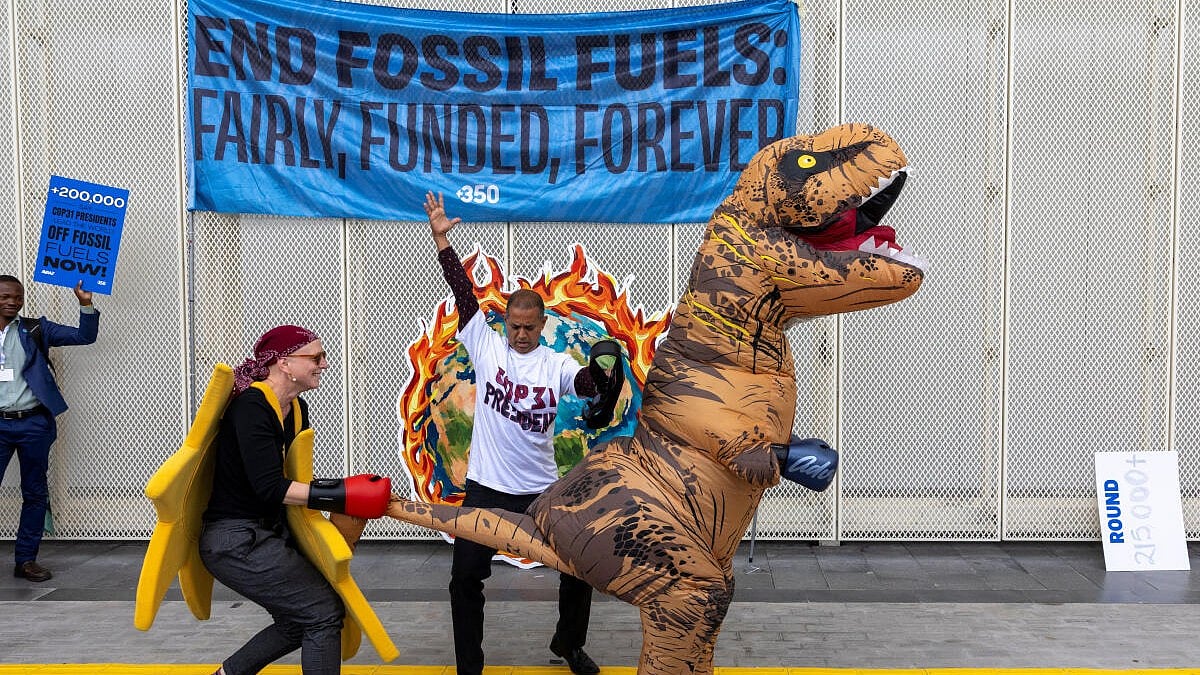
The failure of the Antalya Climate Conference (COP31) to reach political consensus on final decisions has sparked debate over the effectiveness of UN-led climate negotiations. It has exposed deep divisions that plague global climate discourse and revived the question of how to bridge them.
Experience a more refined e-paper today
The talks under the joint presidency of Türkiye and Australia at COP31 broke down when some countries prioritised the issue of fossil fuel phase-out over climate finance.
A group of countries led by the EU refused to concede to decisions on climate finance beyond what was agreed in Baku at COP29. On the other hand, an unconditional phase-out was not acceptable to the fossil fuel-producing countries of West Asia and the North.
The worsening global energy crisis and faltering supply chains have lowered everyone's appetite for a dramatic transition. Moreover, fossil fuel-consuming countries need a clear roadmap for the phase-out and assurance of additional resources.
What has surprised everyone is why the Antalya stalemate could not be averted. It is not the first time that the fossil fuel phase-out issue has surfaced in climate negotiations. There is already an agreed language on fossil fuel phase-out, adopted at the Dubai Climate Conference held in 2023.
The UAE Consensus adopted at Dubai “recognises the need for transitioning away from fossil fuels in energy systems, in a just, orderly and equitable manner, accelerating action in this critical decade so as to achieve net zero by 2050”. The presumption was that countries would have different pathways for the phase-down, considering their varying growth trajectories, rising energy needs and the availability of resources and technologies.
Even last year, at COP30 in Belém, the EU had led a group of countries to demand the inclusion of a decision on fossil fuel phase-out in the final decision. The Brazilian presidency avoided a breakdown by calling for a dialogue on the roadmap for fossil fuel phase-out in accordance with the UAE Consensus.
Geopolitics and climate divide
Why, then, did this fissure deepen at Antalya? Evidently, the countries arguing for phase-out were not willing to wait for a roadmap to be developed. Geopolitics has perhaps played a greater role in this dynamic than climate change imperatives.
EU-led countries see the demand for a phase-out as an opportunity to put pressure on the fossil fuel suppliers that are party to the ongoing wars in various regions.
The unwillingness of developed countries to extend financial assistance beyond what was agreed at Baku brought matters to a head.
In the absence of consensus, the Antalya COP broke down. This was only the third time since the COPs began in 1995, the first being in Berlin in 1995 and the second in Copenhagen in 2009.
The difficulty of taking expeditious decisions at climate conferences has often led some climate enthusiasts to suggest that there should be a provision for voting on contentious issues. This may facilitate quick decisions and avoid failures.
However, a process of voting that ensures quick or fast decisions may not ensure that the decision is equitable or fair to all parties. It is for this reason that the provision for voting under the draft Rules of Procedure of the Convention remains unadopted in the absence of a unanimous decision of the Conference of the Parties.
The Antalya conference did not fail in all respects, despite the fact that it could not clinch the political consensus. The CMA, the highest governing body of the Paris Agreement, was able to call for increasing the share of electricity in total final energy consumption to 35% globally by 2035.
This is over and above the voluntary goals of tripling renewable energy capacity and doubling the rate of energy efficiency improvements that were adopted at previous COPs. It is expected that the initiatives for electrification and clean energy investments would help accelerate the phase-out of fossil fuels in due course.
Although the issue of fossil fuel phase-out dominated the discussions in Antalya, the real concern is that global emissions have not declined despite two rounds of nationally determined contributions being implemented by all developed and developing countries under the Paris Agreement. Fossil fuel phase-out can only help achieve the net-zero goal in the long term, provided it is supported by a well-designed strategy of sectoral transition, technology and finance.
To reverse the rise in temperature in the medium term, deeper emissions cuts by developed countries are needed in the short term. This has not been forthcoming, and the relevant decisions of the CMA have not paid enough attention to this aspect. Similarly, a decision on climate finance was conspicuous by its absence in Antalya.
It failed to generate any momentum on how to implement the goal of mobilising $300 billion a year from 2035 onwards and $1.3 trillion a year, including private, public and multilateral finance. The crucial demand for increasing adaptation finance to at least $120 billion a year was met with indifference and intransigence by countries that have a responsibility to finance this need.
The Antalya conference has helped frame the climate actions of countries like India in a positive light. India depends on coal to provide over 72% of its final energy demand. Yet, it has been able to use its own resources to create renewable energy capacity that exceeds 50% of its total electricity capacity and meet 26% of total electricity demand.
The share of electricity in India's final energy consumption is already 23%, which is comparable with the global level. All this has largely been achieved with domestic resources. The progress is dramatic and could have been accelerated if it had been supported by global capital and investments.
Despite the disagreement over fossil fuel phase-out that eclipsed Antalya, the future of the Paris Agreement lies in advancing nationally determined actions under a positive agenda of sustainable development and supporting a regime of international finance that helps deliver such an agenda.
(The writer is a Distinguished Fellow at TERI and a former climate negotiator)
Only Deccan Herald has reported this so far. New reports from every outlet are matched against it through the day.
BlindspotNo other outlet has reported this yet.
Coverage breakdown
01
Outlet
01
Report
01
Language
Coverage by language
Outlet reliability
National vs local desks
Full coverage
1 outletDeccan Herald · EN
COP31: Ambitions meet acrimony in Antalya
Reliability unrated